
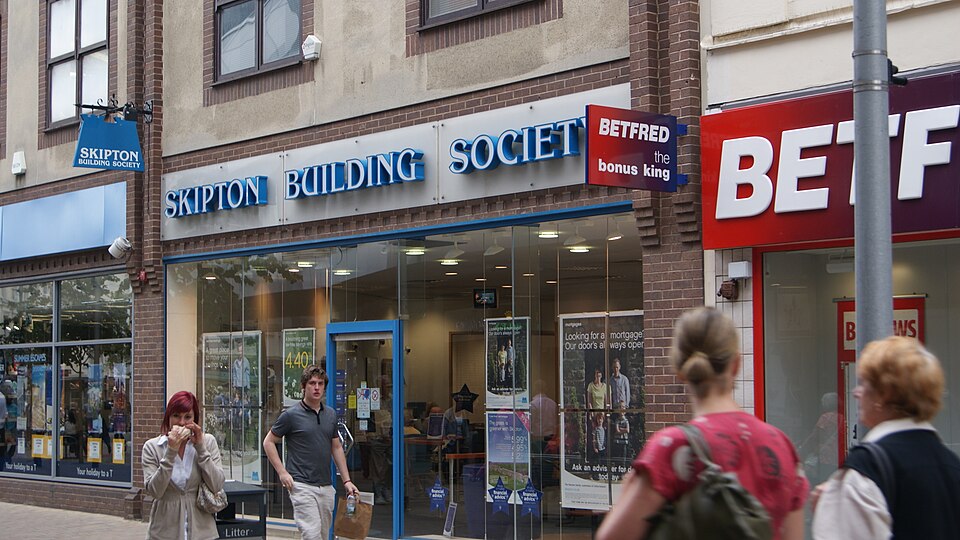
Lambert Smith Hampton is the underfire £40 million property consultancy embroiled in the £90 million Lord Street case. But LSH is ultimately owned by Britain’s fourth largest mutual, the Skipton. However, the trusted high-street lender has faced a string of other legal cases over the years, including an age-discrimination judgment involving a top boss, a rare public mortgage mis-selling reprimand and findings over customer treatment – while accounts at the Skipton’s offshore bank reveal an ongoing regulatory remediation programme
- Skipton Group ultimately owns Lambert Smith Hampton, the third defendant in the £90 million Lord Street case
- Potential costs and damages in the long-running alleged malfeasance dispute are more than DOUBLE what LSH is worth
- Skipton may have to step in on a potential bail out, if LSH loses the case
- A 2026 Employment Tribunal found Skipton Group Holdings executives played an “integral role” in unlawful age discrimination
- Skipton Building Society was also publicly reprimanded after an Ombudsman found “compelling evidence” of mortgage mis-selling
- The mutual later caused uproar by suspending a mortgage-rate ceiling customers had regarded as a valuable protection
- A Financial Ombudsman subsequently found Skipton had “clearly misled” another mortgage customer
- Skipton International’s latest accounts reveal regulatory remediation following a Guernsey watchdog review – with additional costs considered probable but still impossible to quantify
THE BUILDING SOCIETY at the top of the corporate empire behind Lambert Smith Hampton has a controversial legal and regulatory record entirely of its own.
Skipton Group ultimately controls LSH, the property consultancy embroiled in the Isle of Man’s extraordinary £90 million Lord Street court battle.
Last week, on Thursday September 3, LSH’s lawyers appeared at the Isle of Man’s High Court in the latest directions hearing of the long-running case.
Tomorrow, Expose.News will publish a full court report of those proceedings.
Meanwhile, the corporate relationship has already put Skipton under scrutiny as the litigation moves towards trial.
Expose.News has previously examined both the ownership chain behind LSH and the questions it creates for Skipton.
A separate investigation detailed the legal record of Connells and Countrywide.
A specialist investigative newsite called The Armadillo has also investigated LSH’s own history and its role in Lord Street.
Those cases need not be rehearsed again.
Instead Expose.News has looked higher up the corporate ladder at Skipton itself.
And some of the most significant findings involve Skipton companies directly – rather than wrongdoing inherited through later acquisitions.
The latest adverse finding was the 2026 Employment Tribunal case involving former Connells’ chief executive David Livesey.
The most significant historic consumer matter involved the 1999 Building Societies Ombudsman mortgage case.
Skipton hit by age-discrimination judgment
David Livesey, who headed Connells for 16 years, brought proceedings against Connells Limited and Skipton Group Holdings Limited.
The Employment Tribunal upheld claims including direct age discrimination and unfair dismissal.
Most significantly for this investigation, the judges did not regard Skipton as a remote corporate owner which simply happened to be sitting above Connells.
The tribunal found Skipton Group Holdings executives played an “integral role” in events and held the Skipton company liable on the basis that it had instructed, caused or induced the discriminatory treatment, or knowingly helped it.
The official case is recorded in the Government’s Employment Tribunal decisions database, while Livesey’s lawyers HFW have published their account of the successful discrimination and dismissal claims.
Mortgage mis-selling reprimand
More than a quarter of a century earlier, Skipton became embroiled in another remarkable confrontation.
In 1999, Building Societies Ombudsman Brian Murphy found what he described as “compelling evidence” that Skipton had mis-sold a mortgage.
Skipton rejected his compensation ruling.
Murphy responded by deploying rarely used powers to publicly reprimand the society and require publicity surrounding his findings.
Contemporary coverage by The Independent details the extraordinary confrontation.
The dispute concerned a commercial mortgage marketed at a rate stated as one per cent above base rate. The actual rate later varied between one and four percentage points above base rate.
The Ombudsman ordered Skipton to reimburse the difference, fix the future rate and pay compensation.
Skipton maintained that the one-per-cent figure was not a lifetime commitment and said the customers had not been misled.
The dispute was later settled with them.
But the significance lies in the Ombudsman’s finding – and Skipton’s extraordinary decision not to accept it.
The mortgage “promise” row
Skipton found itself back in controversy during the financial crisis.
It had given qualifying borrowers a contractual ceiling limiting its Standard Variable Rate to no more than three percentage points above Bank Rate unless exceptional circumstances applied.
In 2010 it invoked that exception and increased its SVR from 3.5 per cent to 4.95 per cent.
Evidence submitted to Parliament said this could add more than £1,450 a year to repayments on a £150,000 mortgage and described the move as demonstrating the weakness of consumer protection around variable rates. The Parliamentary evidence remains available here.
Skipton argued that historically low interest rates amounted to exceptional circumstances. Its own explanation of the SVR ceiling and exceptional-circumstances mechanism remains online.
This was a major controversy, not a finding that Skipton broke the law.

Indeed, a later Financial Ombudsman complaint concerning the SVR from 2018 onwards was not upheld.
Ombudsman: Skipton “clearly misled” customer
Another Skipton-specific Ombudsman case produced a more direct criticism.
The Ombudsman found that a communication from Skipton contained a mistake which clearly misled the customer, causing inconvenience and confusion. Skipton offered compensation and the Ombudsman decided no additional payment was necessary.
The full Financial Ombudsman decision can be read here.
Offshore bank faces regulatory remediation
There is also a much more recent issue inside Skipton’s financial-services empire which has received comparatively little attention.
Skipton International Limited – wholly owned by Skipton Building Society – underwent a supervisory review by the Guernsey Financial Services Commission under its PRISM regulatory programme.
The Group’s earlier accounts said enhancements had been identified and were being monitored by its Board Audit Committee.
But Skipton International’s 2025 accounts go further.
They say regulatory engagement remains ongoing and management now considers it probable that additional costs will be incurred completing remediation.
Those may include advisers, system and process improvements and additional compliance resources.
However, the company says it still cannot reliably estimate the amount or timing, so no accounting provision has been recognised.
The disclosure appears in Skipton International’s 2025 financial statements. The bank remains listed by the Guernsey Financial Services Commission as a regulated banking licensee.
That is particularly interesting now.
Skipton’s sprawling group includes a building society, an offshore bank and Britain’s largest estate-agency operation. Its own 2025 material confirms that commercial real-estate advisory services are supplied through Lambert Smith Hampton, a Connells group company.
None of those matters proves anything about LSH’s conduct in Lord Street.
But as the £90 million Manx litigation shines a spotlight up the corporate chain, the question is becoming broader than one property consultancy.
ENDS
