
Felix Von der Geest: Expose IOM desk
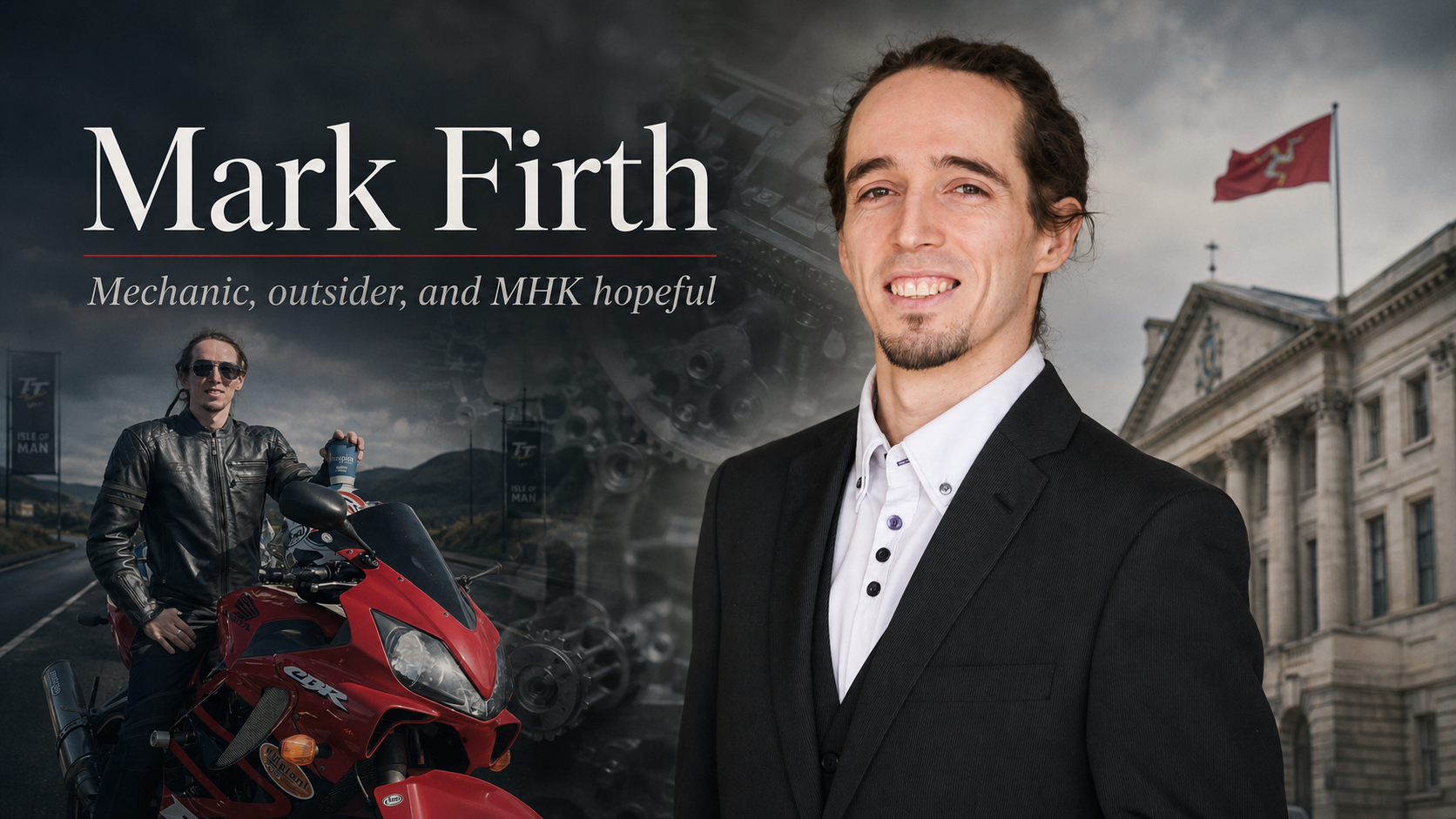
Mark Firth is used to looking under the hood to find out why a system is failing. But the local mechanic is moving from the car engine to the engine of government because he is fed up. Not one to pull his punches, Mark offers a change in background and communication style to your average Manx politician. He has positioned himself as an ‘everyday person, with everyday values’, looking to deal with issues he feels have been neglected. From the cost-of-living crisis to government reform, he’s ready to challenge the status quo and bridge the gap between politicians and regular people. Amongst the buzz of TT week, I sat down with Mark to talk about why he’s running and his key policies.
Felix Von Der Geest: I’ll just start with a simple question. What made you decide to run for MHK?
Mark Firth: So, my initial interest was about two years ago with the Assisted Dying Bill. My mom was heavily involved with that (Pro, for reference). From there, I just started getting agitated, listening to how they talk in Tynwald. I was really peed off with the decisions being made. I started listening to more of the sittings and going, “These people are idiots.” I thought, there are a lot of people with a similar level of discontent, so maybe I have a good chance of getting in.
FV: The cost of living is one of the key issues you are running on. How do you deliver for people on that?
MF: It is something that’s struck a chord with me. We need affordable housing. You struggle to buy any sort of property or house for less than 300 grand nowadays. And that is not affordable to the everyday person on, say, 30 grand a year. The main thing is easing burdens on people so that they can go out and spend in the economy. Lowering VAT on things like your beverages when you go out for a drink. But one of the biggest things is that there’s no access to get home unless we get a taxi, because there’s no bus.
FV: One thing some people might look to is that the Isle of Man retains this competitive advantage in the global economy by leveraging low levels of taxation to attract high net worth individuals, and yet at the same time, you see these issues around housing and cost of living. Do you think there might be a way to balance those two things out?
MF: Absolutely, while we are all worrying that we’re going to lose these high-net-worth people, unless they’re spending in the economy, they’re not really adding much to the economy. If you’ve got a Lamborghini, you’re not getting it serviced over here, so you’re not adding to the mechanics. But they’ve got places all over the world. They’re not staying here. They’re not going to be going to Tesco; they’re not going to be going to a little corner shop. So, they’re not really adding. Whereas if we remove the tax cap and say tax at 2%, but that is all you’re paying. That could raise millions straight off the bat to ease that burden on the government, so that they can put more into other services.
Another thing I’ve considered is a voluntary excess in terms of national insurance contribution by percentage of your income. So, it’s not measured on how much you’ve done, but how much of an extra percentage relevant to your income you have contributed. and then [you] get moved up a ladder of how quickly [you] can access this. The incentive is there to then go, if you do this, you’ll get better access. But it’s not forcing anything on anyone.
FV: You’ve proposed government reforms. What would they look like?

MF: I’d like to see a review of government services in all departments, looking for problem areas. Because I do believe a lot of our civil service is being mismanaged. If you have a bad manager and people who don’t look after you, then you don’t stick around. So, I think the easiest way to source and stamp out issues in the government workforce is to go through looking for these areas where they have high staff turnover and then look to review it. It can’t go on. It’s not a sustainable system. It needs fixing. Same with healthcare. It’s not just the doctors where they’re saying there’s a systemic bullying regime. It’s multiple areas: the doctors, the nurses, and the pharmacy.
**FV: **What do you think you are going to be able to bring that is different from the people who have come before you?
**MF: **What would stand out for most people is that I’m an everyday person. I have everyday values. I’m living by experience, so I’ve got all the motivation to want to make that change. I do want to fight it. They might not know me on a personal level, but I’m a stubborn person. I don’t take no for an answer. I don’t just back down. If something is getting under my skin that I’m going, “No, this is a problem that we need fixing,” I will keep coming back around to go, “No, this needs to change.” And nine times out of ten, I’m normally right on that, and I can make that change.
The General Election is set to take place on the 24th September 2026. Firth will be standing in the constituency of Arbory, Castletown and Malew as an independent candidate alongside Jeroen Wats, and Kirrie Jenkin.
