

EXPOSE.NEWS COMMENT
PART 1
- Island policy expects around 25% affordable housing on major developments
- But Expose. News comments on sites in three different parts of the island.
- Developers can seek viability exemptions or cash contributions instead
- Critics warn some builders are simply buying their way out of the obligation

The Clerk of Tynwald’s Office is situated on Finch Road, Douglas, IoM Credit:Tynwald
Tynwald, the Isle of Man’s independent parliament, has promised hundreds of affordable homes – but planning decisions and viability arguments have raised questions about what is actually being delivered.
Lack of low-cost dwellings aside, the Isle of Man has no shortage of housing policy, though.
There are a plethora of targets, schemes and long term commitments, all aimed at improving access to homes for those who need them most.
The Island’s housing framework includes a requirement for around 25% of homes in qualifying developments to be affordable, alongside a government commitment to support up to 1,000 value residences over the next decade.
Take the first time buyer schemes, such as First Home Fixed and First Home Choice.
Then, there are the longer-term plans to increase supply through the creation of a housing association.
The re-use of 48 empty public sector properties, and the identification of government sites for future development, all contribute to the belief that the goal is genuine.
But as pressure builds across the Island’s housing market, a more difficult question is emerging.
Is affordable housing being delivered – or negotiated away in long-running and complicated planning applications ?
That question is no longer abstract.
It is playing out in real time in Douglas?
POLICY VS REALITY
At the centre of the Island’s planning framework is a clear expectation.
Developments of a certain scale should include affordable housing provision, typically set at around 25%.
The 25% expectation is designed to balance developer viability with public need, ensuring that a proportion of new homes remain accessible to local residents.
The intention is straightforward.
As new homes are built, a proportion should go to first time buyers, working households and those priced out of the open market.
The 25% requirement is not absolute.
In Port Erin, a proposed Ocean Castle development saw the builders argue that delivering affordable housing would be ‘challenging’, instead proposing a financial contribution.
Planning policy allows this, meaning the 25% can be reduced or replaced depending on viability and the prospect of a ‘commuted sum’ of cash for the cause.
But in practice, delivery is far less consistent.

At Lord Street, a major redevelopment of the former bus station site proposes 85 flats in a central location close to transport, jobs and services.
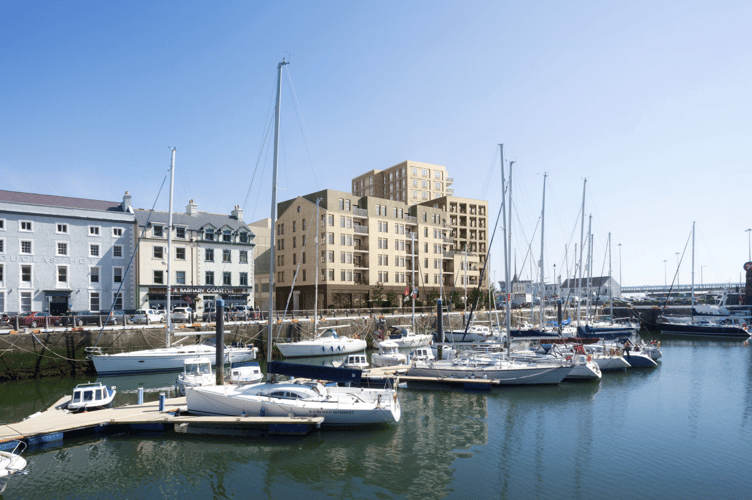
Artist’s impression / computer generated image of the planned appartment building on Lord Street….how the it could look. Credit Lord Street Development SPV Ltd
In Malew, a separate scheme delivered no on-site affordable housing at all, with a commuted sum agreed to fund value properties elsewhere.
The chair of the Housing and Communities Board has warned that developers are ‘buying their way out of building affordable housing’, highlighting how the 25% requirement can be bent in practice.
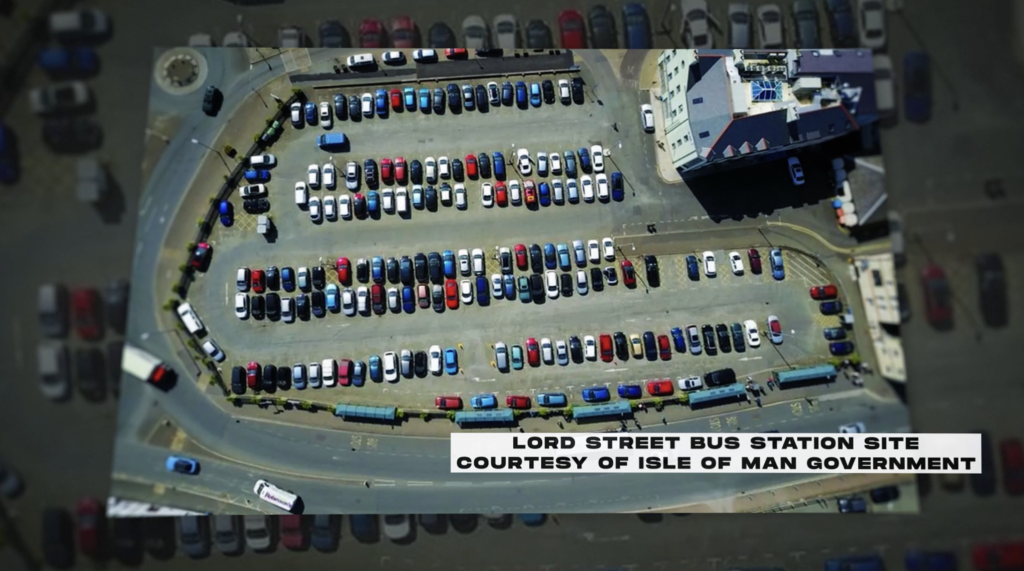
The reality: Lord Street has been a car park for longer than most locals care to remember
Under the current proposal, not a single affordable home on Lord Street is guaranteed.
Instead, Conor and Stephen Bradley’s approach, via Lord Street SPV, ties contributions towards affordable housing to profitability thresholds.
If returns do not meet those levels, the contribution may not be delivered at all.
Planning officers have indicated that such an approach would be unlikely to be accepted on most sites, but may be considered in this instance due to the specific characteristics of the development.
With an affordable housing contribution capped at around £1.1 million, the scale of the gap becomes clearer when broken down.
That arithmetic is where the policy promise starts to fray.
